Saturday, February 9, 2013
One day
A day will come,
believe me,
when you will be tried,
in front of a judge
accused.
For,
a crime that you didn't commit,
a sentiment that you didn't believe in,
a thought that you had not expressed,
an identity that is your opposite,
a face that is not you,
a voice that is not yours.
All in the name of,
national interest, for a nation of hypocrites,
collective conscience, a conscience which sleeps in a coffin,
public good, while you wonder who is this public.
Alas for when you are executed,
they will say,
Better late than never,
whatever happens, happens for good,
truth has prevailed,
justice has been served.
For every finger that is pointed at you,
One day,
There will be fingers pointing to that finger
and so on....
A day will come,
believe me.
One day.


Thursday, January 31, 2013
Life in Dec 17 - Jan 31
Sometimes it is better to forget. After what can be described a highly successful last year, 2013's first month was a lot below the expectations. Or perhaps i had punted the difficult decisions of 2012 on to 2013 and am now reeling under the weight of failed expectations. In any case, tomorrow is a new day, a new month and i am still alive.
Highlights of this time period in the life and times of the great, if not the greatest, the one and only me are -
Trip to Shillong: Bangalore-Ranchi-Kolkatta-Guwahati-Shillong-Bangalore. Shillong stay was awesome with typical touristy stuff, board games, playing cards and family fun. Pics are uploaded here
Trip to Delhi: Bangalore-Nagpur-Delhi-Bangalore. Finished Nagpur work. Met relatives, old college friends at Delhi and attended Nikhil's sangeet and wedding ceremony. Overall a good trip.
Books:
The Dune
Behind the Beautiful Forevers
Courses:
Game theory (half done)
Critical thinking in global challenges (yet to start)
Consumer Law is still going on. Need to decide thesis topic.
Movies -
Inkaar (3/5). An extra half mark just because of the subject matter. Sudhir Mishra, it seems, begins with the right ideas, has the correct intentions, gets most things right but somewhere in the process gives in to the mundane pressures of film making and his end products instead of being bold and defining (as the subjects are) movies of our times are reduced to yet another commercial movie. It is a sincere request to him to please take more risk, we are there to support him.
Les Miserables (4/5). A very good movie. Loved the the direction, songs, lyrics, acting and almost everything. Perhaps one of the few hollywood musicals that i have enjoyed. Directed by Tom Hooper (of King's speech fame), Les Miserables is a treat to watch. It almost comes off as an opera.
Broken city (1/5): Trash movie.
The impossible (3/5) Decent movie. Tsunami sequence is really well done.
Lots of movies at BIFFES
The Hobbit: An unexpected journey (3/5) Delighted to see Dr.Watson as the hobbit. Fills some nostalgia of LOTR but still not as good as them.
Attended Yamini - the overnight classical concert at IIMB ,Spicmacay. Came mid way as i got fever. But attended Malvika Sarrukai's awesome Bharanatyam performance followed by violin instrumental.
Went to National Gallery of Modern Art (NGMA) with Nandini. Decent collection. Almost empty. Ample parking, lots of trees and a decent cafe. A place for future hangouts :)
Cricket with office colleagues. A different kind of chess and Cities and Knights expansion.
Lots of office work and more coming in the coming days.
Highlights of this time period in the life and times of the great, if not the greatest, the one and only me are -
Trip to Shillong: Bangalore-Ranchi-Kolkatta-Guwahati-Shillong-Bangalore. Shillong stay was awesome with typical touristy stuff, board games, playing cards and family fun. Pics are uploaded here
 |
| Shillong trip |
Trip to Delhi: Bangalore-Nagpur-Delhi-Bangalore. Finished Nagpur work. Met relatives, old college friends at Delhi and attended Nikhil's sangeet and wedding ceremony. Overall a good trip.
Books:
The Dune
Behind the Beautiful Forevers
Courses:
Game theory (half done)
Critical thinking in global challenges (yet to start)
Consumer Law is still going on. Need to decide thesis topic.
Movies -
Inkaar (3/5). An extra half mark just because of the subject matter. Sudhir Mishra, it seems, begins with the right ideas, has the correct intentions, gets most things right but somewhere in the process gives in to the mundane pressures of film making and his end products instead of being bold and defining (as the subjects are) movies of our times are reduced to yet another commercial movie. It is a sincere request to him to please take more risk, we are there to support him.
Les Miserables (4/5). A very good movie. Loved the the direction, songs, lyrics, acting and almost everything. Perhaps one of the few hollywood musicals that i have enjoyed. Directed by Tom Hooper (of King's speech fame), Les Miserables is a treat to watch. It almost comes off as an opera.
Broken city (1/5): Trash movie.
The impossible (3/5) Decent movie. Tsunami sequence is really well done.
Lots of movies at BIFFES
The Hobbit: An unexpected journey (3/5) Delighted to see Dr.Watson as the hobbit. Fills some nostalgia of LOTR but still not as good as them.
Attended Yamini - the overnight classical concert at IIMB ,Spicmacay. Came mid way as i got fever. But attended Malvika Sarrukai's awesome Bharanatyam performance followed by violin instrumental.
Went to National Gallery of Modern Art (NGMA) with Nandini. Decent collection. Almost empty. Ample parking, lots of trees and a decent cafe. A place for future hangouts :)
Cricket with office colleagues. A different kind of chess and Cities and Knights expansion.
Lots of office work and more coming in the coming days.
Book Review: Behind the Beautiful Forevers
Behind the Beautiful Forevers: Life, Death and Hope in Mumbai Undercity
By Katherine Boo
A non-Indian writing about a slum in India. An Amazon Bestseller. A darling among neo-liberal elites. I had a lot of hesitation on reading this book before i decided to make it part of our book club meetup. My reluctance arises because non-Indians writing about India often had a very monothematic view of a multidimensional nation. Moreover, often under the pretext of reporting, these books quickly devolve into a venting medium for their opinions (aka "feelings") . Either India is glorified or criticizes depending on filters applied to their viewing lens.
My view was changed after i carefully read this article - http://www.caravanmagazine.in/books/honey-gatherers and no matter what i write, my review will always short of Girish Shahane's writeup. I think the concluding paragraph is superbly written and should be read by everyone -
"In scripting Peter Brook’s Mahabharata two and a half decades ago, Jean-Claude Carriére reduced to a single allegory the long (perhaps ‘interminable’ is a better word) disquisition delivered by the dying Bhishma in the canonical text. Asked by Yudhisthira about the cause of the world’s savagery, Carriére’s Bhishma raises his head briefly from a cradle of arrows to say, “A man is walking in a dark, dangerous forest, filled with wild beasts… He falls into a pitch-black hole. By a miracle, he is caught in some twisted roots. He feels the hot breath of an enormous snake, its jaws wide open, lying in the bottom of the pit. He is about to fall into these jaws. On the edge of the hole, a huge elephant is preparing to crush him. Black and white mice gnaw the roots from which the man is hanging. Dangerous bees fly over the hole letting fall drops of honey. Then, the man holds out his finger—slowly, cautiously—he holds out his finger to catch the drops of honey. Threatened by so many dangers, with hardly a breath between him and so many deaths, he still isn’t free from desire. The thought of honey holds him to life.” Bhishma and Yudhisthira view the man’s reaching out for honey as a great defeat, but for those like myself who see only oblivion beyond the earthly life, the protagonist embodies a resilient, even heroic, human spirit in his refusal to let wretched circumstances overwhelm him. The people of Annawadi lead lives so precarious, so circumscribed and powerless, their situation appears analogous to that of the man in the pit. Some, like Kalu, are trampled by the elephant. Others like Meena let themselves fall into the snake’s jaws. But many like Abdul and Sunil stay resolute, clinging to what support they can find, and stretching out to catch a few drops of honey."
Yet, inspite of the Caravan review, i must persist just to add my support to this precious book that provides strength to me just because of its existence.
To begin with, i would like to offer a standing ovation, a salute, to Katherine Boo for boldly covering a topic that many would not dare to do so. My respect comes with a tinge of sadness as i expect current Indian journalists to write such accounts, to cover other aspects of society that are not faced by middle class. The task would have been a lot difficult for any Indian but for a foreigner to come and report such detailed accounts of people living in slums, people who hardly speak English, would have been a herculean task and kudos to Mrs. Boo to deliver it with conviction.
Almost the first reaction that hits you within first five pages of reading is "I can't believe it is non fiction". Written in a detailed literary narrative prose, with book elements such as prologue wherein a suicide becomes a murder, chapters that are character introductions, the book almost comes off as a well scripted three act play. Katherine frequently describes inner emotions of book's people, keeping us, the readers, hanging in the dark as we can't be sure if they really confided in her or is this an author's artistic liberty with the subject. As a result, even after we have come to terms with the fact that it is indeed a factual documentation of true events, the feeling of detachment lingers on. Personally, i could not identify with the people described but it was only after a few days of finishing the book, once the trance of novel's prose got over, i discovered the sadness in it, the failure of our times.
Behind the Beautiful Forever chronicles lives of people living in Angadwadi, a slum next to the Mumbai airport. The book captures events after an old woman known as One-leg burns herself to spite her neighbors. Her death is seen as a murder and its blame falls on Abdul, a young muslim garbage tradesman whose little rise in class, owing to his quick ability to sift through garbage, causes jealousy among people around him . The book also covers the slumlord Asha, her daughter Manju and other people, their hopes and aspirations and how the system works at that level.
Once you accept the prose, there are two things that makes this book a success that it has been getting. For one, Katherine Boo successfully stays away from letting her feelings cloud the narration. It is indeed a difficult task to not be judgmental about people and throughout the book, you can feel the strain. It is only in her closing remarks she shares her thoughts and opinions. The second feat of this book is by giving such a detailed account of their lives, it changes the perception of middle/upper class people towards them.
Boo's elegance and sharpness shows off as she connects the dots that seem very far apart. By juxtaposing two unrelated yet factual events, she is able to chart out the scale of disparity that exists between what is commonly called as India and Bharat.
In her description of Angadwadi, she writes -
'…almost no one in this slum was considered poor by official Indian benchmarks. Rather, the Annawadians were among roughly one hundred million Indians freed from poverty since 1991, when, around the same moment as the small slum’s founding, the central government embraced economic liberalization.'
She begins the chapter on Manju as -
'The plot of Mrs Dalloway made no sense whatsoever to Manju. Doing her college reading, Asha's daughter felt so sluggish that she feared she'd caught dengue fever or malaria again - hazards of living thirty feet from a buzzing sewage lake. No, she decided. It was simply the weather.'
Later, in the third act, after couple of suicide attempts in the slum, Boo writes '...Manju and her friend Meena, in the secret nightly meetings at the public toilet, began discussing more foolproof means of suicide'
Abdul, who is beaten in prison after being falsely accused of One-Leg's murder, later recounts
'They will probably beat him(Kasab) lots in the jail, but atleast Kasab knows in his heart that he did what they say he did. That had to be less stressful than being beaten when you were innocent'
I used to wonder why would anyone or what kind of people steal bulbs and mirrors from train coaches, or steal cables connecting telephone/internet lines to our homes. I often thought that those who stole would be habitual thieves and are doing so just to be an additional inconvenience to society. But as i read about Sunil's escapades and his stealing of aluminum pipes (known as German silver) and other un-rusted construction material from the airport, i realize the necessity behind it. Instead of looking at the action condescendingly, i can now empathize with Sunil. We cry foul as stealing a light bulb is again the societal rules but for people living in Angadwadi, the entire concept of a society is now a fantasy. Rules of fantasy-land do not apply in real world.
I used to believe that people living in slums would be part of a very tight knit community, everyone knowing what is happening with everybody else and in my mind, this image was a positive image with people helping each other in times of need. Angadwadi shatters this image by repeatedly striking a mirror with a strong hammer. That the corruption has gone so low that people feel nothing when taking something from those who have nothing, that our moral compass has gone for a toss as people with active ferocity take advantage of anybody that can be trampled, that those who were supposed to help (the orphanages, the govt. hospitals etc), and those who were supposed to protect (the police, the state) are the ones exploiting them in a manner that even animals would walk away.
How did we get to this? Is there a way out and if so, how do we get to it? I do not have any answer and Boo does not offer any. Instead Boo closes the book with a section titled Author's Note where she describes her reasons behind this project and the process behind it. She describes so by asking questions like - '... After all there are more poor people than rich people inthe world's Mumbais. Why don't places like Airport road, with their cheek-by-jowl slums and luxury hotels, devolve into arrant violence? Why don't more of our unequal societies implode?' I too do not have any answer to them. In her note, Boo's outlook is still optimistic. She acknowledges the positive impact of globalization, she believes that better policy will get formulated as ordinary lives are understood in more detail. This book is her attempt in this direction.
By Katherine Boo
A non-Indian writing about a slum in India. An Amazon Bestseller. A darling among neo-liberal elites. I had a lot of hesitation on reading this book before i decided to make it part of our book club meetup. My reluctance arises because non-Indians writing about India often had a very monothematic view of a multidimensional nation. Moreover, often under the pretext of reporting, these books quickly devolve into a venting medium for their opinions (aka "feelings") . Either India is glorified or criticizes depending on filters applied to their viewing lens.
My view was changed after i carefully read this article - http://www.caravanmagazine.in/books/honey-gatherers and no matter what i write, my review will always short of Girish Shahane's writeup. I think the concluding paragraph is superbly written and should be read by everyone -
"In scripting Peter Brook’s Mahabharata two and a half decades ago, Jean-Claude Carriére reduced to a single allegory the long (perhaps ‘interminable’ is a better word) disquisition delivered by the dying Bhishma in the canonical text. Asked by Yudhisthira about the cause of the world’s savagery, Carriére’s Bhishma raises his head briefly from a cradle of arrows to say, “A man is walking in a dark, dangerous forest, filled with wild beasts… He falls into a pitch-black hole. By a miracle, he is caught in some twisted roots. He feels the hot breath of an enormous snake, its jaws wide open, lying in the bottom of the pit. He is about to fall into these jaws. On the edge of the hole, a huge elephant is preparing to crush him. Black and white mice gnaw the roots from which the man is hanging. Dangerous bees fly over the hole letting fall drops of honey. Then, the man holds out his finger—slowly, cautiously—he holds out his finger to catch the drops of honey. Threatened by so many dangers, with hardly a breath between him and so many deaths, he still isn’t free from desire. The thought of honey holds him to life.” Bhishma and Yudhisthira view the man’s reaching out for honey as a great defeat, but for those like myself who see only oblivion beyond the earthly life, the protagonist embodies a resilient, even heroic, human spirit in his refusal to let wretched circumstances overwhelm him. The people of Annawadi lead lives so precarious, so circumscribed and powerless, their situation appears analogous to that of the man in the pit. Some, like Kalu, are trampled by the elephant. Others like Meena let themselves fall into the snake’s jaws. But many like Abdul and Sunil stay resolute, clinging to what support they can find, and stretching out to catch a few drops of honey."
Yet, inspite of the Caravan review, i must persist just to add my support to this precious book that provides strength to me just because of its existence.
To begin with, i would like to offer a standing ovation, a salute, to Katherine Boo for boldly covering a topic that many would not dare to do so. My respect comes with a tinge of sadness as i expect current Indian journalists to write such accounts, to cover other aspects of society that are not faced by middle class. The task would have been a lot difficult for any Indian but for a foreigner to come and report such detailed accounts of people living in slums, people who hardly speak English, would have been a herculean task and kudos to Mrs. Boo to deliver it with conviction.
Almost the first reaction that hits you within first five pages of reading is "I can't believe it is non fiction". Written in a detailed literary narrative prose, with book elements such as prologue wherein a suicide becomes a murder, chapters that are character introductions, the book almost comes off as a well scripted three act play. Katherine frequently describes inner emotions of book's people, keeping us, the readers, hanging in the dark as we can't be sure if they really confided in her or is this an author's artistic liberty with the subject. As a result, even after we have come to terms with the fact that it is indeed a factual documentation of true events, the feeling of detachment lingers on. Personally, i could not identify with the people described but it was only after a few days of finishing the book, once the trance of novel's prose got over, i discovered the sadness in it, the failure of our times.
Behind the Beautiful Forever chronicles lives of people living in Angadwadi, a slum next to the Mumbai airport. The book captures events after an old woman known as One-leg burns herself to spite her neighbors. Her death is seen as a murder and its blame falls on Abdul, a young muslim garbage tradesman whose little rise in class, owing to his quick ability to sift through garbage, causes jealousy among people around him . The book also covers the slumlord Asha, her daughter Manju and other people, their hopes and aspirations and how the system works at that level.
Once you accept the prose, there are two things that makes this book a success that it has been getting. For one, Katherine Boo successfully stays away from letting her feelings cloud the narration. It is indeed a difficult task to not be judgmental about people and throughout the book, you can feel the strain. It is only in her closing remarks she shares her thoughts and opinions. The second feat of this book is by giving such a detailed account of their lives, it changes the perception of middle/upper class people towards them.
Boo's elegance and sharpness shows off as she connects the dots that seem very far apart. By juxtaposing two unrelated yet factual events, she is able to chart out the scale of disparity that exists between what is commonly called as India and Bharat.
In her description of Angadwadi, she writes -
'…almost no one in this slum was considered poor by official Indian benchmarks. Rather, the Annawadians were among roughly one hundred million Indians freed from poverty since 1991, when, around the same moment as the small slum’s founding, the central government embraced economic liberalization.'
She begins the chapter on Manju as -
'The plot of Mrs Dalloway made no sense whatsoever to Manju. Doing her college reading, Asha's daughter felt so sluggish that she feared she'd caught dengue fever or malaria again - hazards of living thirty feet from a buzzing sewage lake. No, she decided. It was simply the weather.'
Later, in the third act, after couple of suicide attempts in the slum, Boo writes '...Manju and her friend Meena, in the secret nightly meetings at the public toilet, began discussing more foolproof means of suicide'
Abdul, who is beaten in prison after being falsely accused of One-Leg's murder, later recounts
'They will probably beat him(Kasab) lots in the jail, but atleast Kasab knows in his heart that he did what they say he did. That had to be less stressful than being beaten when you were innocent'
I used to wonder why would anyone or what kind of people steal bulbs and mirrors from train coaches, or steal cables connecting telephone/internet lines to our homes. I often thought that those who stole would be habitual thieves and are doing so just to be an additional inconvenience to society. But as i read about Sunil's escapades and his stealing of aluminum pipes (known as German silver) and other un-rusted construction material from the airport, i realize the necessity behind it. Instead of looking at the action condescendingly, i can now empathize with Sunil. We cry foul as stealing a light bulb is again the societal rules but for people living in Angadwadi, the entire concept of a society is now a fantasy. Rules of fantasy-land do not apply in real world.
I used to believe that people living in slums would be part of a very tight knit community, everyone knowing what is happening with everybody else and in my mind, this image was a positive image with people helping each other in times of need. Angadwadi shatters this image by repeatedly striking a mirror with a strong hammer. That the corruption has gone so low that people feel nothing when taking something from those who have nothing, that our moral compass has gone for a toss as people with active ferocity take advantage of anybody that can be trampled, that those who were supposed to help (the orphanages, the govt. hospitals etc), and those who were supposed to protect (the police, the state) are the ones exploiting them in a manner that even animals would walk away.
How did we get to this? Is there a way out and if so, how do we get to it? I do not have any answer and Boo does not offer any. Instead Boo closes the book with a section titled Author's Note where she describes her reasons behind this project and the process behind it. She describes so by asking questions like - '... After all there are more poor people than rich people inthe world's Mumbais. Why don't places like Airport road, with their cheek-by-jowl slums and luxury hotels, devolve into arrant violence? Why don't more of our unequal societies implode?' I too do not have any answer to them. In her note, Boo's outlook is still optimistic. She acknowledges the positive impact of globalization, she believes that better policy will get formulated as ordinary lives are understood in more detail. This book is her attempt in this direction.
Book Review: The Dune
The Dune
By Frank Herbert
We, human beings, have always been tempted by the science of astrology - namely the prescient knowledge of events before they take place. There is a strong desire in everyone of us to know what is to happen before time. It is not that the current events are boring that we look towards the future in hope of excitement. Perhaps it has more to do with the present bleakness that pushes us to look towards future out of our ingrained perpetual optimism. Or may be we need a comfort to sustain ourselves, a consolation that our efforts will not go in vain. Maybe its both or neither. It is with this nuanced understanding of the unpredictability of our psyche that makes Frank Herbert's Dune an excellent novel.
The Dune is set on a desert planet Arrakis where water is so scarce that people wear suits that collects water released by body pores and purifies it back into a tasteless liquid which is again consumed back by humans. These suits work with extraordinary efficiency such that the only water loss happens due to sweat from palms of our hands. Just as winter governed everything in the LeGuin's Left hand of darkness, everything happens in Dune either because of water or spice (a highly desired element that can be manufactured in desert only. It comes as no surprise that Dune started a niche sub-genre under science fiction namely - Eco-science fiction.
The story of Dune after all its fantasy layers are unveiled is a story of revolution, a hero's journey from an ordinary man to a legend against all odds, the struggle of small vs the big. A young kid, Paul, suddenly finds himself fighting first for his own survival, then soon as a savior of an entire tribe of people. The magic of dune lies in unraveling of its plot. Not only the elements of fantasy are creative but they are applied with caution and sense. The plot moves at a comfortable pace with lots of action happening in quick succession.
For me, the added layer of prescient knowledge shared in just a few lines at the introduction of each chapter added a level of complexity that was just too much to bear as it filled me with a curiosity that was unstoppable. Is Paul the Muad'Dib? Is he going to eventually marry the Princess? Should i believe these opening lines? If so, is it really going to happen as it says? What if Frank Herbert is just messing up with my mind? They say that a little knowledge is dangerous but knowledge of events about to happen is debilitating. One starts to question the present and future seems more uncertain than before. From a plot point of view, it adds nothing as we eventually witness those events. But from a literary perspective, it is a masterstroke. It prevents the novel from being an extremely sad, pessimistic one to one with hope and adds a philosophical layer that is needed to deliver the enormous wall it wishes to climb.
In addition to environment and ecology, Frank brings in his incredible knowledge of different religions especially Islam. The book can be also be seen as a study in sociology, or an application of political science, or micro-analysis of human psychology. The fact that Dune does a great job in so many departments is what makes it such an interesting read. One can feel that it is a result of lots of research, endless hours and a lot of passion.
Dune also has its sequels wherein Frank analyzes the negative aspects of Heroism - blind belief in anybody could be dangerous as well. I have not read the follow-ups, nor i intend to do so in any near future. Dune itself was fulfilling and one never likes their heroes to fall.
By Frank Herbert
We, human beings, have always been tempted by the science of astrology - namely the prescient knowledge of events before they take place. There is a strong desire in everyone of us to know what is to happen before time. It is not that the current events are boring that we look towards the future in hope of excitement. Perhaps it has more to do with the present bleakness that pushes us to look towards future out of our ingrained perpetual optimism. Or may be we need a comfort to sustain ourselves, a consolation that our efforts will not go in vain. Maybe its both or neither. It is with this nuanced understanding of the unpredictability of our psyche that makes Frank Herbert's Dune an excellent novel.
The Dune is set on a desert planet Arrakis where water is so scarce that people wear suits that collects water released by body pores and purifies it back into a tasteless liquid which is again consumed back by humans. These suits work with extraordinary efficiency such that the only water loss happens due to sweat from palms of our hands. Just as winter governed everything in the LeGuin's Left hand of darkness, everything happens in Dune either because of water or spice (a highly desired element that can be manufactured in desert only. It comes as no surprise that Dune started a niche sub-genre under science fiction namely - Eco-science fiction.
The story of Dune after all its fantasy layers are unveiled is a story of revolution, a hero's journey from an ordinary man to a legend against all odds, the struggle of small vs the big. A young kid, Paul, suddenly finds himself fighting first for his own survival, then soon as a savior of an entire tribe of people. The magic of dune lies in unraveling of its plot. Not only the elements of fantasy are creative but they are applied with caution and sense. The plot moves at a comfortable pace with lots of action happening in quick succession.
For me, the added layer of prescient knowledge shared in just a few lines at the introduction of each chapter added a level of complexity that was just too much to bear as it filled me with a curiosity that was unstoppable. Is Paul the Muad'Dib? Is he going to eventually marry the Princess? Should i believe these opening lines? If so, is it really going to happen as it says? What if Frank Herbert is just messing up with my mind? They say that a little knowledge is dangerous but knowledge of events about to happen is debilitating. One starts to question the present and future seems more uncertain than before. From a plot point of view, it adds nothing as we eventually witness those events. But from a literary perspective, it is a masterstroke. It prevents the novel from being an extremely sad, pessimistic one to one with hope and adds a philosophical layer that is needed to deliver the enormous wall it wishes to climb.
In addition to environment and ecology, Frank brings in his incredible knowledge of different religions especially Islam. The book can be also be seen as a study in sociology, or an application of political science, or micro-analysis of human psychology. The fact that Dune does a great job in so many departments is what makes it such an interesting read. One can feel that it is a result of lots of research, endless hours and a lot of passion.
Dune also has its sequels wherein Frank analyzes the negative aspects of Heroism - blind belief in anybody could be dangerous as well. I have not read the follow-ups, nor i intend to do so in any near future. Dune itself was fulfilling and one never likes their heroes to fall.
Sunday, January 13, 2013
Gulzar - BLF - Untitled
(At 2012 Bangalore Literature Festival, Gulzar on the topic of mountains recited a poem. I can not find it either in Selected or Nelgected poems. But i had an audio recording, based on which it is copied below. To me, this was the best poem that he read during those two days.)
पिछली बार भी आया था
तो इसी पहाड़ ने
नीचे खड़ा था
मुझसे कहा था
तुम लोगों के कद क्यूँ छोटे होते हैं ?
आओ हाथ पकड़ लो मेरा
पसलियों पर पांव रखो ऊपर आ जाओ
आओ ठीक से चेहरा तो देखूं
तुम कैसे लगते हो
जैसे मेरे चींटियों को तुम अलग अलग पहचान नहीं सकते
मुझको भी तुम एक ही जैसे लगते हो सब
एक ही फर्क है
मेरी कोई चींटी जो बदन पर चढ़ जाए
तो चुटकी से पकड़ के फेक उसको मार दिया करते हो तुम
मैं ऐसा नहीं करता
मेरे सरोवर देखो,
कितने उचें उचें कद हैं इनके
तुमसे सात गुना तो होंगे
शायद दस या बारह गुना हो
उम्रे देखो उसकी तुम,
कितनी बढ़ी हैं, सदियों जिंदा रहते हैं
कह देते हो कहने को
लेकिन अपने बड़ों की इज्ज़त करते नहीं तुम
इसीलिए तुम लोगों के कद
शायद छोटे रह जाते हैं
इतना अकेला नहीं हूँ मैं
तुम जितना समझते हो
तुम ही लोग ही भीड़ में रहकर भी
तनहा तनहा लगते हो
भरे हुए जब काफिले बादलों के जाते हैं
झप्पा डाल के मिल कर जाते हैं मुझसे
दरिया भी उतरते हैं तो पांव छू के विदा होते हैं
मौसम मेहमान है आते हैं तो महीनों रह कर जाते हैं
अज़ल अज़ल के रिश्ते निभाते हैं
तुम लोगों की उम्रें देखता हूँ
कितनी छोटी छोटी मायादों में मि
लते और बिछड़ते हो
ख्वाबें और उम्मीदें भी
बस छोटी छोटी उम्रों जितनी
इसीलिए क्या
तुम लोगों के कद इतने छोटे रह जाते हैं
पिछली बार भी आया था
तो इसी पहाड़ ने
नीचे खड़ा था
मुझसे कहा था
तुम लोगों के कद क्यूँ छोटे होते हैं ?
आओ हाथ पकड़ लो मेरा
पसलियों पर पांव रखो ऊपर आ जाओ
आओ ठीक से चेहरा तो देखूं
तुम कैसे लगते हो
जैसे मेरे चींटियों को तुम अलग अलग पहचान नहीं सकते
मुझको भी तुम एक ही जैसे लगते हो सब
एक ही फर्क है
मेरी कोई चींटी जो बदन पर चढ़ जाए
तो चुटकी से पकड़ के फेक उसको मार दिया करते हो तुम
मैं ऐसा नहीं करता
मेरे सरोवर देखो,
कितने उचें उचें कद हैं इनके
तुमसे सात गुना तो होंगे
शायद दस या बारह गुना हो
उम्रे देखो उसकी तुम,
कितनी बढ़ी हैं, सदियों जिंदा रहते हैं
कह देते हो कहने को
लेकिन अपने बड़ों की इज्ज़त करते नहीं तुम
इसीलिए तुम लोगों के कद
शायद छोटे रह जाते हैं
इतना अकेला नहीं हूँ मैं
तुम जितना समझते हो
तुम ही लोग ही भीड़ में रहकर भी
तनहा तनहा लगते हो
भरे हुए जब काफिले बादलों के जाते हैं
झप्पा डाल के मिल कर जाते हैं मुझसे
दरिया भी उतरते हैं तो पांव छू के विदा होते हैं
मौसम मेहमान है आते हैं तो महीनों रह कर जाते हैं
अज़ल अज़ल के रिश्ते निभाते हैं
तुम लोगों की उम्रें देखता हूँ
कितनी छोटी छोटी मायादों में मि
लते और बिछड़ते हो
ख्वाबें और उम्मीदें भी
बस छोटी छोटी उम्रों जितनी
इसीलिए क्या
तुम लोगों के कद इतने छोटे रह जाते हैं
Wednesday, December 26, 2012
5th BIFFES
Before the start of 5th Bangalore International Film Fetival, I jokingly remarked to my friend "I would be more happy than sad if i miss any film at the festival on account of it being house full". I was confident that most of the seats would go empty as who watches these odd, hard hitting, heavy, no-song films and that too with subtitles in this "Dabbang" age other than a few eccentric people. I could not have been more wrong.
The lineup of films at 5th edition of BIFFES was strong, diverse and offered something of everything. I was happy that they chose to include a retrospective of Fatih Akin, whom i have followed after accidentally watching his Gegen die wand. Also included in the festival were newly released films by famous directors like Amour by Michael Haneke and Pieta by Kim ki Duk. Typically, there are retrospectives, films from a given director or an actor as a focus area, but Biffes also included a section wherein they focussed on films from a country, Denmark, Taiwan and Germany in this edition. A country focus is a great idea as it presents a unique opportunity to see a country from different perspectives.
By skipping a party, i was able to catch the Oscar nominated Monsieur Lazhar by Philippe Falardeau. A film deserving of an oscar nomination, it has everything that one can hope for, yet it fails to hit the strectch goal that the winner does. Overall, i enjoyed the film a lot, perhaps it was also the lightest, in terms of watchability of films, for me for this festival.
On day 2, Saturday, of the festival, i started by watching Antonioni's Blow up - A 1966 movie that critques the fashion industry at that time, a movie responsible on changing the rules of how MPAA issues film ratings, a cult so much that its reflection can be seen in Kundan Shah's Jaane bhi do yaaron. At the end, while exiting the screening hall, i overheard from someone in crowd - "That this film was made in 1966 with such finesse is beyond belief". I couldn't agree more.
By the time i got out of this film, had my lunch and went to join the queue for The City of Life and Death by Chuan Lu, the queue was already holding more people than i could imagine. An elderly looking man just ahead said to me "It does not matter how long the queue is in front of you, what matters is how many are there behind you." I looked back to see that there are already about 50 people behind me and it was growing. Inox guys closed the gates when the hall reached its capacity and i was left standing outside with about 100 people. Our pleas to let us go in, urging that this is an exceptional circumstance and let regulation be relaxed this time, were deftly handled by Inox's managerial staff. Kudos to them for carrying themselves in a dignified manner at the face of a erudite, cultured crowd that is willing for rules to be bent to benefit them. The same crowd would cry fowl when they see bent rules in any other circumstance.
I instead went to see Prasad, a Kannada film by Dir Manoj Sati. Couple of lead actors were also present during the screening and this was the worst of the 11 films that i saw during 5 days of the film festival. Overtly melodramatic, boring, like a soap opera gone bad. I left it midway. Why o why do we continue to make films in this childish manner is beyond me.
My next excursion was Abbas Kariostami's Certified Copy starring Juliette Binoche. A treat to watch, a typical Kariostami film with ambiguity marked everywhere. My neighbor who had seen Gegen die wand this morning (and disliked it), told me about the parallels between these two movies, especially in the ending, and how different treatment each one gets by their respective directors. It was a very incisive observation, something that i could not have linked together ever. Next came Barbara, directed by Christian Prtzold, it was a surprise gem of a drama with very powerful acting and direction. Barbara is one of those films which would not achieve the cult status but it will be always deemed in respect among cinema lovers. As far as film making is concerned, it gets things right across all departments but does not go that extra mile to shake the viewers.
Tired. I had seen 3.5 movies since morning but one always overeats when there is a buffet. I went in to see 11 flowers by Xiaoshuai Wang. Among other films of the day, it was average but nevertheless it offered a unique glimpse into a chapter of Chinese evolution.
After finishing my work on Sunday, i got the opportunity to catch up the evening programme of the festival. But i had to make tough choices. First was between Napola by Dennis Ganzel and Melanchola by Lars Von Trier. Normally, this would have been no contest, i would have gone for a Lars Von Trier movie without any question but i knew that if i watch it, i will not be able to watch any other after that. But the schedule after that incuded Amour by Haneke and Pieta by Kim Ki Duk. I wanted to see both of them. So, in order to maximize my pleasure i went for Napola and followed it up by Amour as it had won the Palm D'or at Cannes this year. Pieta was also going to be screened again couple of days later.
Napola was shot and produced brilliantly but its story failed to provide any long lasting impact. Yet another German film, yet another one based on WWII but the bar has been raised considerably in this genre now. Before i describe Amour, let me share my views on Michael Hanneke. I have never understood why is he so reverred in film circles. I have seen couple of his films including the cult - Hidden but didn't find it to be too impressive. But i still went in with an open mind. Amour turned out to the be best film for me during the festival. It chronicles life of an elderly couple as the wife sits on her deathbed owing to parallysis on her right side. As a movie, it is emotional, gritty, extremely realistic, convincing and very difficult to watch, all at the same time. When a loved one is dying, you can not abandon him or her yet you can not help but realize that you are stuck with it. Hanneke creates this emotion for us a viewer beause we also stuck with this film but it is our admiration towards it that prevents us from leaving even though it is quite difficult to bear it. With a dreamy sequence, a surreal ending, and lots of minute details embedded, Amour is a brilliant film that you may not watch second time but you must watch it once.
At the start of Pieta on Christmas day, an announcer says that it is 104 minutes long. I say to myself - 104 minutes of torture to be witnessed. As much as i like Kim Ki Duk's movies, it is without shame i admit that i find them difficult to bear. Yet i watch them because they explore some emotion in me that i have never experienced before. His take on things ancient, mythological and contemporary is one that is full of complexities yet there is an attempt to understand it from a human standpoint. Pieta did not prove any different. In a review, one of the critics had mentioned that Pieta is Kim Ki Duk's most commerical movie ever. I laugh at it. I wonder what would someone, unknown to his films, think about his other works after just seeing Pieta. Pieta, interestingly, becomes lighter in second half but that is a luxory available to only those who brave the first half. Atleast 10 people left the movie in first 30 minutes. I would not recommend Pieta to anyone before asking him to watch Spring.Summer... again, sometimes you have to understand a director before understanding his work.
My last movie from this festival was Rust and Bone by Jacques Audiard featuring Marion Cottilard. I decided to catch it owing to Marion's nomination for best actress in Goden Globes this year. Her performance is truly an award winning one but the movie fails to make an impact as it should have. "Was i supposed to empathize with the protagonist" is the lingering question and there were several others who shared my dilemma. But overall it is a pretty good movie.
BIFFES satiated my complaint that i have not got a chance to see enough foreign films since my move back. I thank the organizers, Inox and Lido for organizing this. I am sure next year the crowd would be bigger, queues would be longer - for we have tasted the blood now. Ask any cine-fan and he would admit that watching a movie on big screen is 10 times better than watcing it on tv or laptop. And watching it with other like minded people is even a bonus.
Tuesday, December 25, 2012
Sachin Tendulkar
There was a time when television sets were switched off when Sachin got out. In those days, i used to sit with such attentiveness, as you would normally expect from a kid in a classroom but in my case it was in front of a television, because any ball could have been end of the match but in reality more often it was met with a with a stroke so delightful that my heart used to say "kya baat hai!"
The Image lingers on. Follow through of the bat after a cover drive - a small sized Tendulkar standing absolutely erect with the bat pointing in the direction of the ball, ball which has raced towards boundary piercing a 5 member vanguard meant exactly to stop that. With every year as i grew, i remember less and less about my adulthood but i am confident that these would remain with me. Fast paced bouncers outside offstump were one of the most difficult deliveries to play to until Tendulkar showed that you can simply glide them over the slip cauldron and suddenly they were freebie sixes. A leg spin delivery, pitched outside leg stump spinning into the right hand batsman was considered to be lethal on a spinning track until the little master invented "paddle sweep". Yes, a six gives more runs that a four but what about the joy coefficient? The straight drive by Tendulkar, irrespective of whether he was in form or not, gave so much pleasure that i will trade it anytime over his sixes.
One of my fond memory comes from Australlia's tour of India. During a test match, Glen McGrath runs up to bowl to Sachin and just before the ball is released Sachin raises his hand and says No. Glen is furious and as he asks what's going on, he comes to know that Tendulkar was not happy as people were walking close to the side screen. This will now continue to happen atleast 3-4 more times when McGrath, now even more furious than before, walks up to him and using hand gestures tell him - Why don't you ask the entire stadium to sit calmly? Sachin just shrugs and ignores him. Mcgrath smiles and goes back to bowl.
Critics criticize while doers do. Around 2001-2002, Sachin Tendulkar was labelled as only a first innings man. "He can't handle the pressure of a chase" slammed the critics. To a degree they were right, his first innings average was above 50 while his second innings average was just shy of 30. But data does not speak for circumstances. If wickets at the other end are chipping off, which happened most of the times in mid 90s, Sachin was forced to carry one billion expectations alone and his improvisations didn't work as much as he would have liked. The one inning that put all such accusations to rest was his 98 against Pakistan at the 2003 World cup quarterfinal match. Pakistan has scored 273 which was a fighting total on that pitch and Pakistan's bowling attack was at its prime during that time. This is also perhaps my favorite innings from the little master. On that day, Tendulkar came up with a new strategy to counter the attack. At the last moment before facing a delivery, he would shuffle at his crease towards off stump just a little bit. Now suddenly the corridor of uncertainty, the patch just outside offstump where a batsman is confused on whether he should play the ball or not, became straight for him. Any ball directed towards middle stump was almost on his pads and was played cozily on the leg side. India had scored about 100 runs in first 12 overs and Pakistan were out of their wits on what is going on.
Sachin was always a favorite, India adored him and rest of the world respected him. But the conversion from this to a God-like adulation, from opposition's respect to fear, happened at the Coca Cola cup at Sharjah in 1998 when he stroked back to back centuries and single handedly won the series for India. The assault was brutal and that too against the best ODI side at that time. Evidently, not many people write about it now, even though Sachin scored a century (actually 143 out of India's 250) India lost the qualifying match against Australia but had managed to qualify for finals. After the match, Sachin was actually upset at himself for loosing it. Such was his expectation from himself. For many of us, this has been a regular show - a lone Sachin trying to battle alone. During the 1999 test match between India and Pakistan, the first test match between the two rivals after nine years, India lost to Pakistan by 12 runs. India had scored 258 out of which 136 came from Sachin and 36 from extras. At the post-match press conference, media asked whereabouts of Sachin to Mr. Raj Singh Dungarpur, then BCCI president, to which he replied that Sachin is crying in the dressing room. And so was I in front of my tv set. My tears were partially there for the lost match but mostly i was sorry for Sachin who had given everything that day.
We were happy for him when India won the 2011 world cup. It was only fitting for the Indian team to dedicate the cup to him. It felt justified as if all the wrongs for all those past years had been corrected with this victory. But personally deep down, i always held the regret that we should have won the 2003 world cup. That Indian playing XI inspired true cricket for a fan like me. Plus, we reached the finals in an overseas pitch, something that is very difficult to achieve.
But after world cup came the disappointment period. If truth be declared, i wanted Sachin to retire then from both forms of cricket. There was nothing else for him to prove anymore. The 100th century media pressure appeared superficial to us. For people like us, 10K runs or 100th century never matters, these are by-products, the filings that you get as a stone is carved into sculpture. What matters to us is the class and the grace of those scored runs.
There was disappointment as it took him such a long time to achieve his 100th hundred but what followed after that was even more frustrating. Sachin, who had been so private in his victories, was paraded like a Miss Universe winner. The Ambani party proved such a big farce. It was like a marriage ceremony where unknown friends and relatives dance while you are just standing and watching them from a distance, unable to share any merriment. We felt betrayed. The media circus that followed was trying very hard to make it into a climax of a masala bollywood movie.And us, the indie art house lovers, could not do anything about it.
Deep down, we knew that it is time for him to step down. But who would bell the cat? Everybody hesitated and punted it back on to him - "Only Sachin can decide when he should retire". Harsha Bhogle thought different and articulated intelligently through this article.
As i heard news of his retirement, the inevitable had happened, a feeling of satisfaction took over soon followed by a sweet nostalgia. 10 years ago, me and my friends would often discuss this - what would Sachin's stats look like when he retires? I do not recall what our estimates were but a world cup win did feature in it.
Looking back, if Dravid is remembered as the Wall - thou shall not fall, Sachin would be remembered as a lone Samurai who never gave up hope even if circumstances around him were not optimistic. The man who stood his ground based on the strength of his convictions on his ability, the man who forced everybody else to see things his way, the man who gave a sense of belief to an entire nation. I learnt the meaning of "When the going gets tough, the tough gets going" from him. In future, experts will sing glories of his statistics, teach his shot inventions to youngsters and talk about his long career but they will still be holding back his true impact on this sport, on this nation. Our lives have been shaped by this genius, we the nation owe a big debt of gratitude to him.
The Image lingers on. Follow through of the bat after a cover drive - a small sized Tendulkar standing absolutely erect with the bat pointing in the direction of the ball, ball which has raced towards boundary piercing a 5 member vanguard meant exactly to stop that. With every year as i grew, i remember less and less about my adulthood but i am confident that these would remain with me. Fast paced bouncers outside offstump were one of the most difficult deliveries to play to until Tendulkar showed that you can simply glide them over the slip cauldron and suddenly they were freebie sixes. A leg spin delivery, pitched outside leg stump spinning into the right hand batsman was considered to be lethal on a spinning track until the little master invented "paddle sweep". Yes, a six gives more runs that a four but what about the joy coefficient? The straight drive by Tendulkar, irrespective of whether he was in form or not, gave so much pleasure that i will trade it anytime over his sixes.
One of my fond memory comes from Australlia's tour of India. During a test match, Glen McGrath runs up to bowl to Sachin and just before the ball is released Sachin raises his hand and says No. Glen is furious and as he asks what's going on, he comes to know that Tendulkar was not happy as people were walking close to the side screen. This will now continue to happen atleast 3-4 more times when McGrath, now even more furious than before, walks up to him and using hand gestures tell him - Why don't you ask the entire stadium to sit calmly? Sachin just shrugs and ignores him. Mcgrath smiles and goes back to bowl.
Critics criticize while doers do. Around 2001-2002, Sachin Tendulkar was labelled as only a first innings man. "He can't handle the pressure of a chase" slammed the critics. To a degree they were right, his first innings average was above 50 while his second innings average was just shy of 30. But data does not speak for circumstances. If wickets at the other end are chipping off, which happened most of the times in mid 90s, Sachin was forced to carry one billion expectations alone and his improvisations didn't work as much as he would have liked. The one inning that put all such accusations to rest was his 98 against Pakistan at the 2003 World cup quarterfinal match. Pakistan has scored 273 which was a fighting total on that pitch and Pakistan's bowling attack was at its prime during that time. This is also perhaps my favorite innings from the little master. On that day, Tendulkar came up with a new strategy to counter the attack. At the last moment before facing a delivery, he would shuffle at his crease towards off stump just a little bit. Now suddenly the corridor of uncertainty, the patch just outside offstump where a batsman is confused on whether he should play the ball or not, became straight for him. Any ball directed towards middle stump was almost on his pads and was played cozily on the leg side. India had scored about 100 runs in first 12 overs and Pakistan were out of their wits on what is going on.
Sachin was always a favorite, India adored him and rest of the world respected him. But the conversion from this to a God-like adulation, from opposition's respect to fear, happened at the Coca Cola cup at Sharjah in 1998 when he stroked back to back centuries and single handedly won the series for India. The assault was brutal and that too against the best ODI side at that time. Evidently, not many people write about it now, even though Sachin scored a century (actually 143 out of India's 250) India lost the qualifying match against Australia but had managed to qualify for finals. After the match, Sachin was actually upset at himself for loosing it. Such was his expectation from himself. For many of us, this has been a regular show - a lone Sachin trying to battle alone. During the 1999 test match between India and Pakistan, the first test match between the two rivals after nine years, India lost to Pakistan by 12 runs. India had scored 258 out of which 136 came from Sachin and 36 from extras. At the post-match press conference, media asked whereabouts of Sachin to Mr. Raj Singh Dungarpur, then BCCI president, to which he replied that Sachin is crying in the dressing room. And so was I in front of my tv set. My tears were partially there for the lost match but mostly i was sorry for Sachin who had given everything that day.
We were happy for him when India won the 2011 world cup. It was only fitting for the Indian team to dedicate the cup to him. It felt justified as if all the wrongs for all those past years had been corrected with this victory. But personally deep down, i always held the regret that we should have won the 2003 world cup. That Indian playing XI inspired true cricket for a fan like me. Plus, we reached the finals in an overseas pitch, something that is very difficult to achieve.
But after world cup came the disappointment period. If truth be declared, i wanted Sachin to retire then from both forms of cricket. There was nothing else for him to prove anymore. The 100th century media pressure appeared superficial to us. For people like us, 10K runs or 100th century never matters, these are by-products, the filings that you get as a stone is carved into sculpture. What matters to us is the class and the grace of those scored runs.
There was disappointment as it took him such a long time to achieve his 100th hundred but what followed after that was even more frustrating. Sachin, who had been so private in his victories, was paraded like a Miss Universe winner. The Ambani party proved such a big farce. It was like a marriage ceremony where unknown friends and relatives dance while you are just standing and watching them from a distance, unable to share any merriment. We felt betrayed. The media circus that followed was trying very hard to make it into a climax of a masala bollywood movie.And us, the indie art house lovers, could not do anything about it.
Deep down, we knew that it is time for him to step down. But who would bell the cat? Everybody hesitated and punted it back on to him - "Only Sachin can decide when he should retire". Harsha Bhogle thought different and articulated intelligently through this article.
As i heard news of his retirement, the inevitable had happened, a feeling of satisfaction took over soon followed by a sweet nostalgia. 10 years ago, me and my friends would often discuss this - what would Sachin's stats look like when he retires? I do not recall what our estimates were but a world cup win did feature in it.
Looking back, if Dravid is remembered as the Wall - thou shall not fall, Sachin would be remembered as a lone Samurai who never gave up hope even if circumstances around him were not optimistic. The man who stood his ground based on the strength of his convictions on his ability, the man who forced everybody else to see things his way, the man who gave a sense of belief to an entire nation. I learnt the meaning of "When the going gets tough, the tough gets going" from him. In future, experts will sing glories of his statistics, teach his shot inventions to youngsters and talk about his long career but they will still be holding back his true impact on this sport, on this nation. Our lives have been shaped by this genius, we the nation owe a big debt of gratitude to him.
Sunday, December 16, 2012
Life in Oct 22 - Dec 16
Too much of awesomeness - That's how i would like to describe this period. It seems like that week after week, there is something awesome happening around me. Here are the highlights -
~ Listening poems read by Gulzaar Saab at Bangalore Literature Festival. The first session was called Have you seen the soul? The craft of writing poetry. It was a conversation between Pavan K Varma and Gulzaar saab. The latter read his poems and former read its translations and the duo shared anecdotes of working together and how difficult it is to translate. The next session was titled - Subah Subah ik khwaab ki dastak par. While the first session focused on the craft, the second one was focused on the imagery in his poems. Dil khush ho jaata hai Gulzaar saab ko sun kar ke.
~ Ruhaniyat - a Sufi Mystic Music festival. Detailed report at - http://arvindbatra.blogspot.in/2012/12/ruhaniyat-2012.html
~ Between the lines - A play by Nandita Das. A little bit cliched writing but nevertheless a good topic and fine performance. Between the lines takes the issue of role of women in a marriage and analyzes it under the context of an actual legal battle where husband is the prosecutor, wife is the defendant in a case wherein the wife is accused of accidentally shooting her husband.
~ US trip - Bentonville, Grand Canyon, Alamere falls, SF Moma and office work.
~Movies - Lots of them.
Lincoln(4/5), The Master(3/5), The Sessions.(3/5)
Where do we go now, Polisse, Beasts of the southern wild, To Rome with Love, Brave, The odd life of Timothy Green
Chaalis Churasi(1/5), Hannah's Law (2/5), The Best Exotic Marigold Hotel (3.5/5), Halt (3.5/5)
Student of the Year (0/5) - Had to watch it as i had 6 hrs to kill in Chennai after my visa interview.
Dr. No (2/5).
~ The West Wing. Loved it! Watched seasons 1 to 4 in 3 weeks. Great political drama with very crisp writing, a clever screenplay and touching a side of politics that should be analyzed. Highly recommended.
~ Forrest Gump by Winston Groom. Listened to the Audio book. Taking this material and making a movie like Forrest Gump is a great feat. Liked the book in parts, not so in other but it fails completely in front of the movie
~ Finished Greek and Roman Mythology course on coursera. Passed with distinction.
~ Read Listening to Grasshoppers: Field notes on democracy by Arundhati Roy.
~ Go Karting with office colleagues.
~ A day trip to Chennai for visa interview.
~ Listening poems read by Gulzaar Saab at Bangalore Literature Festival. The first session was called Have you seen the soul? The craft of writing poetry. It was a conversation between Pavan K Varma and Gulzaar saab. The latter read his poems and former read its translations and the duo shared anecdotes of working together and how difficult it is to translate. The next session was titled - Subah Subah ik khwaab ki dastak par. While the first session focused on the craft, the second one was focused on the imagery in his poems. Dil khush ho jaata hai Gulzaar saab ko sun kar ke.
~ Ruhaniyat - a Sufi Mystic Music festival. Detailed report at - http://arvindbatra.blogspot.in/2012/12/ruhaniyat-2012.html
~ Between the lines - A play by Nandita Das. A little bit cliched writing but nevertheless a good topic and fine performance. Between the lines takes the issue of role of women in a marriage and analyzes it under the context of an actual legal battle where husband is the prosecutor, wife is the defendant in a case wherein the wife is accused of accidentally shooting her husband.
~ US trip - Bentonville, Grand Canyon, Alamere falls, SF Moma and office work.
~Movies - Lots of them.
Lincoln(4/5), The Master(3/5), The Sessions.(3/5)
Where do we go now, Polisse, Beasts of the southern wild, To Rome with Love, Brave, The odd life of Timothy Green
Chaalis Churasi(1/5), Hannah's Law (2/5), The Best Exotic Marigold Hotel (3.5/5), Halt (3.5/5)
Student of the Year (0/5) - Had to watch it as i had 6 hrs to kill in Chennai after my visa interview.
Dr. No (2/5).
~ The West Wing. Loved it! Watched seasons 1 to 4 in 3 weeks. Great political drama with very crisp writing, a clever screenplay and touching a side of politics that should be analyzed. Highly recommended.
~ Forrest Gump by Winston Groom. Listened to the Audio book. Taking this material and making a movie like Forrest Gump is a great feat. Liked the book in parts, not so in other but it fails completely in front of the movie
~ Finished Greek and Roman Mythology course on coursera. Passed with distinction.
~ Read Listening to Grasshoppers: Field notes on democracy by Arundhati Roy.
~ Go Karting with office colleagues.
~ A day trip to Chennai for visa interview.
Ruhaniyat 2012
Upon entering a makeshift gate into the empty ground in front of the Jayamahal Palace hotel, a wind of peace greets you leaving a sweet smile on your face. An Egyptian saintly artist is playing a Santoor like instrument on a mildly lighted stage under a tree which is reflecting rainbow colors from its branches. Such is the welcome imagery at the 12th edition of Ruhaniyat 2012 organized by the Banyan tree group.
The way of the spirit or Ruhaniyat, an annual Sufi Mystic Music festival, brings diverse Sufi artists under one theme - that of touching your soul. The Bangalore edition started with Zikr-e-Rigayi Fakirs from Andhra Pradesh, a 11 men troupe, singing devotional prayers. This was followed by Vaya quartet from Bulgaria. Trained from as early as five years of age, Vaya quartet uses vocal harmonics to sing traditional folk Bulgarian songs. Their voice has an angelic beauty and softness that transcends the language and its meaning, just close your eyes and you can feel the playfulness, the love and pure mood of celebration.
 |
| From Bangalore Events 2012 |
 |
| From Bangalore Events 2012 |
The next performance was by Kachra Khan and group performing various Sufi Kalam and mystic songs. One member of the group, sitting at far left with his kit-kit like instrument and an infectious energy just made our hearts dance inside us. This was followed by an impromptu Jugalbandi on stage between the group and two instrumentalists from Egypt. A mix of soulful instruments, sharp percussion beats, a slow cool breeze and artists who are just enjoying themselves , a recipe of unbound pleasure.
 |
| From Bangalore Events 2012 |
Parvathy Baul came next and i do not know how to describe her. She plays small table with her left hand, an ektara with her right hand, sings mostly at a high pitch and then dances with ghongroos on her legs - all at the same time. Parvathy has been associated with the festival since its first year and her solo performance transports one back to the age of Megha Dhake tara where the lone Baul singer is singing "Maaji tumhaar naam jaani na". How much i wish she would sing that line.
 |
| From Bangalore Events 2012 |
Just when you believe that you have seen the most extraordinary performance of the night comes the Egyptian duo of Dancing Dervishes performing the Tannoura. The following video is an example performance -
The evening was brilliantly anchored by Banyan Tree, every performance was preceded by the anchor explaining the theme or mood behind every rendition. At the end of the Tannoura performance, as an FYI, the anchor mentions that each skirt weighs about 20 kgs in weight in case you thought that it was light to carry and whirl. Tannoura is an extension of Sufi whirling - a physically active meditation in which the dervish aims to reach the source of all perfection.
 |
| From Bangalore Events 2012 |
The final performance was an hr long plus Sufi Qawalli by Fareed Ayaz and group. Starting with the ever lively Allah Hoo, they sang Kabir vani, Baba Bulle Shah finally ending with Amir Khusro's Aaj Rang hai. Qawalli as a performance is so rich, nuanced and meaningful, it is hard to fathom that the only instruments in play are harmonium, tabla and hand clapping. It has so much power that even a non-believer will start believing just to share the experience of praying like a Qawwal.
At the beginning of concert, i had wondered - what would be the way of a spirit? (Ruhaniyat kise kehte hain). At the end, i knew the answer. It was in Parvathy Baul, it was in the spins of Devrishes, it was in the voice of Vaya quartet, and it is in the voice of a Qawwal. There are many Ruhaniyats, inshallah, shayad humein bhi naseeb hogi!
Saturday, December 8, 2012
Bentonville
It was a work visit that took me to Bentonville, Arkansas. Prior to my visit, people had told horror stories about the place. Stories included dearth of vegetarian food, warehouse converted into offices and there is no life in the town. Five minutes after landing, i knew that i am going to like the place. You ask why? Because of all the open space around us. I could see fields, cows, and houses with fences that covered land as big as football fields.
Most of the time at BV was spent in meetings and yes, those meeting did happen in offices which had no windows (they could have been warehouses as well). But everything else was quite good.
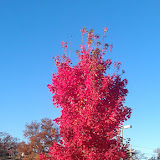
The first thing that stood out at BV was the fall leaves on trees. Those gorgeous reddish-orange-yellow shining leaves act as though they inhale tension and exhale freshness. It was a delight to see them everywhere and how can a place be depressing when its trees have such kind of leaves.
On a casual stroll one morning, just few meters away from my hotel, i came across some of these homes which looked like the image below. It was quiet, no traffic, lots of empty spaces and such a relaxed place to live in. There in front of me was the countryside, the scenery of The Straight Story which i had admired and desired so much.
On the last day, we briefly visited Crystal Bridges - the contemporary art museum there. Like a gateway to a different world, it hides the Ozark forest in its backyard and inside hides art pieces chosen diligently and houses one of the most brilliant art works of our time. There are even some 3 miles of hike trails around it but we didn't do anything but just to make a note of things to do the next time.
Bentonville may not be a very happening town, there may not be many pubs or hangout places or there may not be much diversity in employment opportunities. But it offers something that, i guess, only those who have grown up in small towns can comprehend. It offers free space, nature, a DIY experience that is missing and finally a slow pace of life that we all yearn for.
 |
| From BentonvilleTrip |
 |
| From BentonvilleTrip |
Bentonville may not be a very happening town, there may not be many pubs or hangout places or there may not be much diversity in employment opportunities. But it offers something that, i guess, only those who have grown up in small towns can comprehend. It offers free space, nature, a DIY experience that is missing and finally a slow pace of life that we all yearn for.
 |
| BentonvilleTrip |
Grand Canyon
Two friends met after a year and were sipping coffee. One wanted to get away from all the daily humdrum and other wanted to know what he can do with all the free time he had. Both unaware of each other's reasons. One said - "I am planning to visit Grand Canyon, chalna hai?" And prompt came the reply - "chalo" . And so Manas and me went to Grand Canyon. A big thanks to Manas for his company!
With a round trip ticket from SFO-LV costing only $65, we booked Spirit airlines. Spirit had a rating of 1 out of 5 only because people could not rate zero. But in terms of ROI it will be ranked one of the highest. I had no complaints whatsoever.
People land in Las Vegas, then drive from LV to Grand Canyon and finally hike to bottom of the rim all in one day. By the time we reached Grand Canyon, Sun was already down and even the visitor center was closed. Our drive was full of halts and we spent good amount of time at Hoover Dam and Pat Tillman bridge, longer than we should have. Our lunch stop was at an all American Diner called Griddles which had a hard time finding vegetarian place for us. But in the middle of nowhere, Griddles is a specialty restaurant, here there are no plates but instead small griddles made up of some aluminum compound, or may be it is a toast to some bygone era.
It was before dawn when we left our lodge. We started hiking the Rim trail on the Western edge when it was twilight and hiked all through Dawn untill we were at Powell's point to see the Sunrise. Sunrise was beautiful.
Grand Canyon is beautiful if you just look at it. It goes forever in either directions and as you look at it, you feel that you are witnessing something extraordinary. For many, this may be it. But the true trance feeling comes when you just sit there and look it calmly. It is a therapeutic experience. One can't get enough of it. As you focus your attention to one part of the canyon, there is another part howling for you attention. The rocks in front of you have been there since the day Earth was born, they have seen everything. On the lighter side, my thought went to the Total Perspective Vortex in The HitchHiker's guide to the Galaxy, the ultimate torture device, which showed you how tiny you are in the entire universe. Similarly, grand canyon reminded me how small is our life span compared to this canyon, but instead of being tortuous, it was a serene feeling. If there needs to be a teacher to teach you that your life span is indeed small given the entire universe, the teacher has to be similar in size and magnitude of the Grand Canyon. Global warming, pollution, sea level rise etc etc, as if the Grand Canyon is trying to tell us - i have seen everything before and have survived and so i will do now, you worry about yourself. The beauty of Grand Canyon comes from its scars and ridges, it is the face of a strong man who has bore everything. Like the Atlas who carried the world on his shoulders, the Atlas who is refusing to shrug.
As you sit there and see the Sun rise up and down, you quickly realize that every second imagery at Grand Canyon is different. The interplay of shadows from one canyon to another is very fascinating, one could never get tired of it. We saw the Grand Canyon from the Hermit's rest, from the East side and then later from the Desert Watch Tower. Next day, we saw it from Yavapai point and another point whose name i have forgotten now.
We hiked the trail going down for about 1.5 miles. We were extremely negative about our ability to hike, so much so that what we had estimated would take 4 hrs, we were done in 2.5 hrs. The biggest disappointment from the trip would be our inability to hike down to the base. We should have planned better and we should have done it. But even in that 1.5 mile hike going down, the view changes every half mile and it offers a unique perspective. We also joined the elite group of 5% of visitors who visit every year and take a step below the Rim. For the most part, people are happy to stay at the Rim itself.
On the last day, we took a Ranger tour where a Ranger explained to us how nature works symbiotically at the Canyon. The Ranger's enthusiasm to explain things was infectious. It was an informative tour. What should have ideally been our first stop became our last and so we went into the visitor center. This photo of the first group of people who came to Grand Canyon by the Colorado river is something that i still reflect upon sometimes -
Other GC excursions included watching a documentary on Grand Canyon, visiting the Train depot, a failed attempt to see Sunrise on the next day, another failed attempt to listen a talk on importance of Fire as i slept midway, and a visit to the Tusayan museum. Also, we stopped at Route 66 both while coming and going as it was just interesting to witness a town that would have been at its prime decades ago but now is struggling to attract tourists. Imagine if that will happen to Manhattan and Times Square. The imagery of a deserted Time Square signals doom of mankind in my mind.
The complete album can be seen at -
With a round trip ticket from SFO-LV costing only $65, we booked Spirit airlines. Spirit had a rating of 1 out of 5 only because people could not rate zero. But in terms of ROI it will be ranked one of the highest. I had no complaints whatsoever.
People land in Las Vegas, then drive from LV to Grand Canyon and finally hike to bottom of the rim all in one day. By the time we reached Grand Canyon, Sun was already down and even the visitor center was closed. Our drive was full of halts and we spent good amount of time at Hoover Dam and Pat Tillman bridge, longer than we should have. Our lunch stop was at an all American Diner called Griddles which had a hard time finding vegetarian place for us. But in the middle of nowhere, Griddles is a specialty restaurant, here there are no plates but instead small griddles made up of some aluminum compound, or may be it is a toast to some bygone era.
It was before dawn when we left our lodge. We started hiking the Rim trail on the Western edge when it was twilight and hiked all through Dawn untill we were at Powell's point to see the Sunrise. Sunrise was beautiful.
Grand Canyon is beautiful if you just look at it. It goes forever in either directions and as you look at it, you feel that you are witnessing something extraordinary. For many, this may be it. But the true trance feeling comes when you just sit there and look it calmly. It is a therapeutic experience. One can't get enough of it. As you focus your attention to one part of the canyon, there is another part howling for you attention. The rocks in front of you have been there since the day Earth was born, they have seen everything. On the lighter side, my thought went to the Total Perspective Vortex in The HitchHiker's guide to the Galaxy, the ultimate torture device, which showed you how tiny you are in the entire universe. Similarly, grand canyon reminded me how small is our life span compared to this canyon, but instead of being tortuous, it was a serene feeling. If there needs to be a teacher to teach you that your life span is indeed small given the entire universe, the teacher has to be similar in size and magnitude of the Grand Canyon. Global warming, pollution, sea level rise etc etc, as if the Grand Canyon is trying to tell us - i have seen everything before and have survived and so i will do now, you worry about yourself. The beauty of Grand Canyon comes from its scars and ridges, it is the face of a strong man who has bore everything. Like the Atlas who carried the world on his shoulders, the Atlas who is refusing to shrug.
 |
| From Grand Canyon |
As you sit there and see the Sun rise up and down, you quickly realize that every second imagery at Grand Canyon is different. The interplay of shadows from one canyon to another is very fascinating, one could never get tired of it. We saw the Grand Canyon from the Hermit's rest, from the East side and then later from the Desert Watch Tower. Next day, we saw it from Yavapai point and another point whose name i have forgotten now.
We hiked the trail going down for about 1.5 miles. We were extremely negative about our ability to hike, so much so that what we had estimated would take 4 hrs, we were done in 2.5 hrs. The biggest disappointment from the trip would be our inability to hike down to the base. We should have planned better and we should have done it. But even in that 1.5 mile hike going down, the view changes every half mile and it offers a unique perspective. We also joined the elite group of 5% of visitors who visit every year and take a step below the Rim. For the most part, people are happy to stay at the Rim itself.
 |
| From Grand Canyon |
On the last day, we took a Ranger tour where a Ranger explained to us how nature works symbiotically at the Canyon. The Ranger's enthusiasm to explain things was infectious. It was an informative tour. What should have ideally been our first stop became our last and so we went into the visitor center. This photo of the first group of people who came to Grand Canyon by the Colorado river is something that i still reflect upon sometimes -
 |
| From Grand Canyon |
Other GC excursions included watching a documentary on Grand Canyon, visiting the Train depot, a failed attempt to see Sunrise on the next day, another failed attempt to listen a talk on importance of Fire as i slept midway, and a visit to the Tusayan museum. Also, we stopped at Route 66 both while coming and going as it was just interesting to witness a town that would have been at its prime decades ago but now is struggling to attract tourists. Imagine if that will happen to Manhattan and Times Square. The imagery of a deserted Time Square signals doom of mankind in my mind.
The complete album can be seen at -
Subscribe to:
Posts (Atom)